


 Dark roast
For people with things to do
Fully Charged
Dark chocolate, cocoa, molasses, and rustic fruit with a bold, smooth finish.
Washed / natural
View coffee →
Roast. Grind. Water. Time.
A closer look at what changes your coffee—and how to make every bag taste its best.
Coffee for every attitude
Six coffees. Five signature roasts. One rotating single-origin special. Whole bean. No bad choices.
Dark roast
For people with things to do
Dark chocolate, cocoa, molasses, and rustic fruit with a bold, smooth finish.
Washed / natural
View coffee → Medium roast
Still coffee. Less shouting.
Bittersweet coffee, brown sugar, baking spice, and bright fruit with a clean, easy finish.
Washed / natural
View coffee → Medium-dark roast
Espresso roast
Caramel, toasted almond, dark chocolate, and a citrus-red fruit lift. Smooth without bitterness.
Natural process
View coffee → Medium roast
Espresso roast
Jammy blueberry, raspberry, citrus, ganache, and a soft cinnamon finish.
Washed / natural
View coffee → Rotating profile
The roaster's call
A rotating single-origin from limited seasonal lots—Ethiopia, Colombia, Costa Rica, and wherever the good thing is happening next.
Single origin · seasonal
View coffee → Medium-dark roast
Decaf espresso roast
Almond, dark chocolate, panela, apple, and stone fruit. Full flavor with the caffeine dialed down.
EA decaf process
View coffee →Taste the attitudes
Sample the core four in 2-ounce bags—or add Dialed Down and make it five.
Choose your equipment
Pick the brewer already on your counter. Each card opens a focused technique guide with the exact starting recipe.
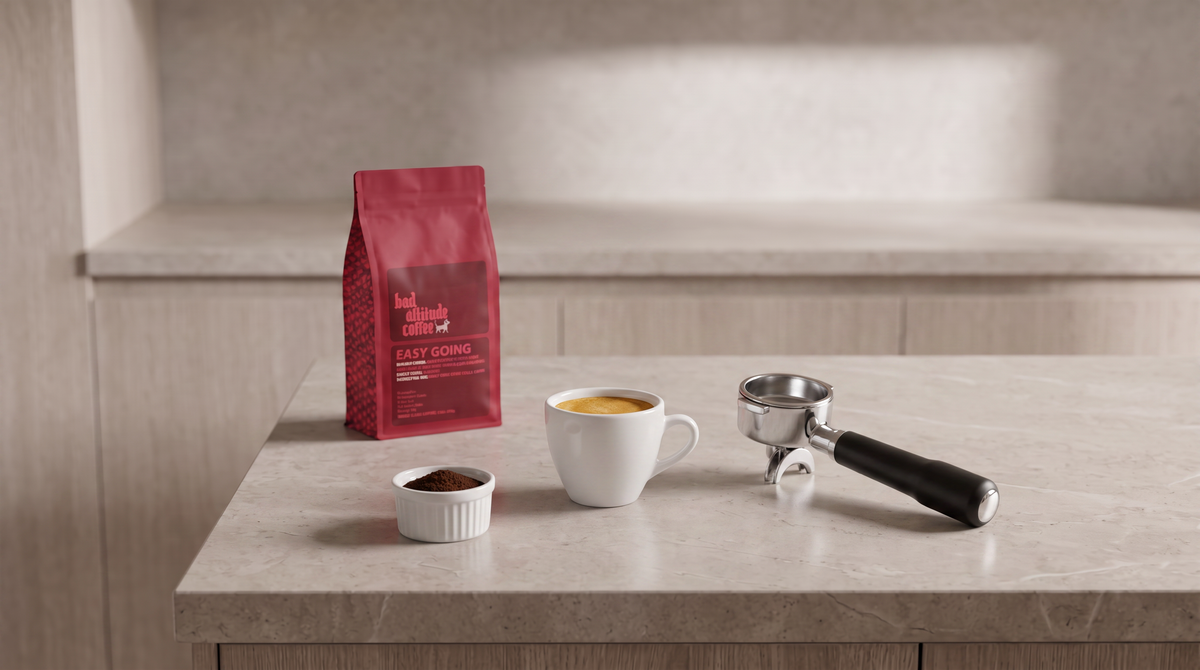
Pressure brew
Change the grind before changing the dose.
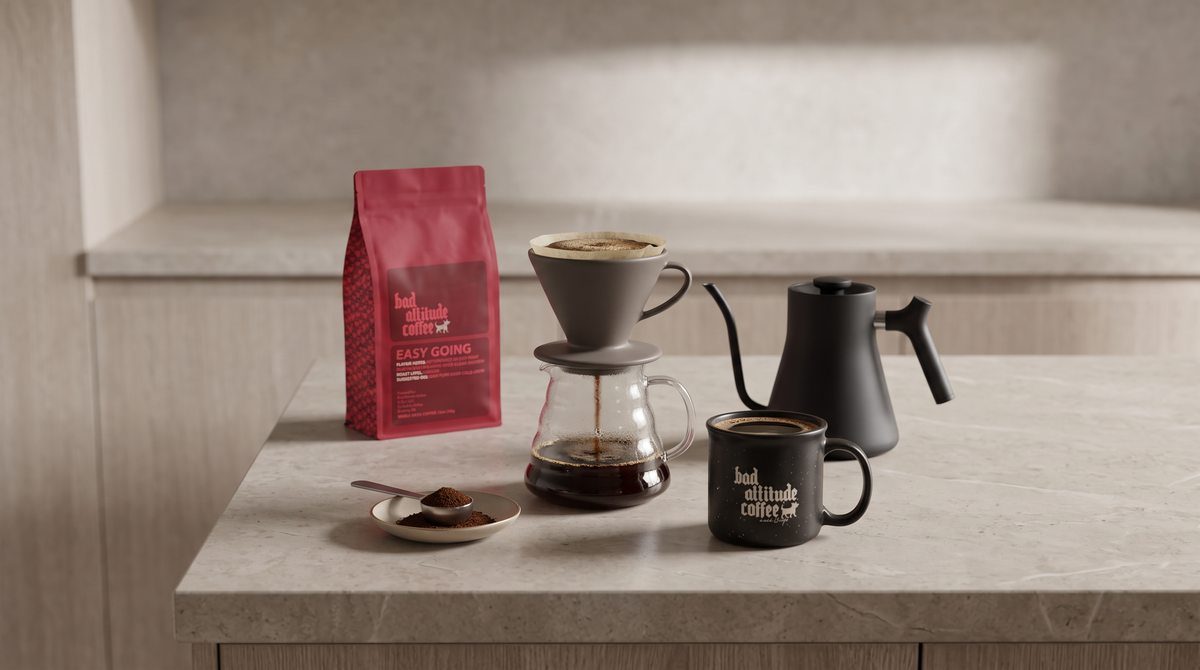
Filter brew
Sour: grind finer. Bitter or dry: grind coarser.
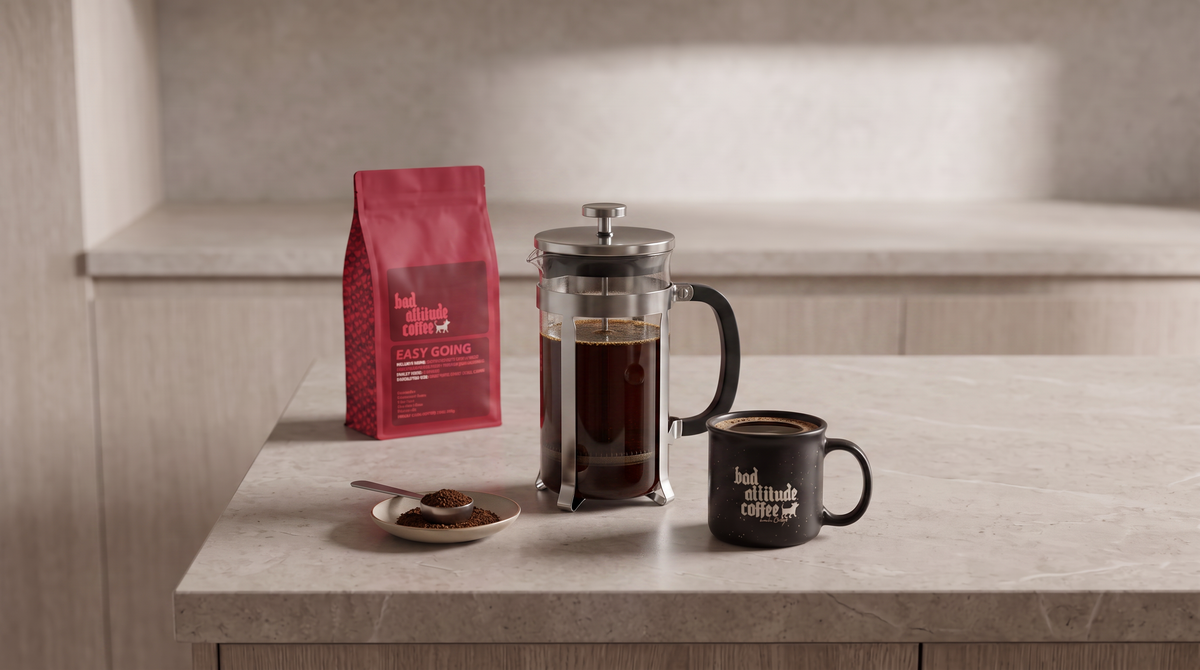
Immersion brew
Do not leave brewed coffee sitting on the grounds.
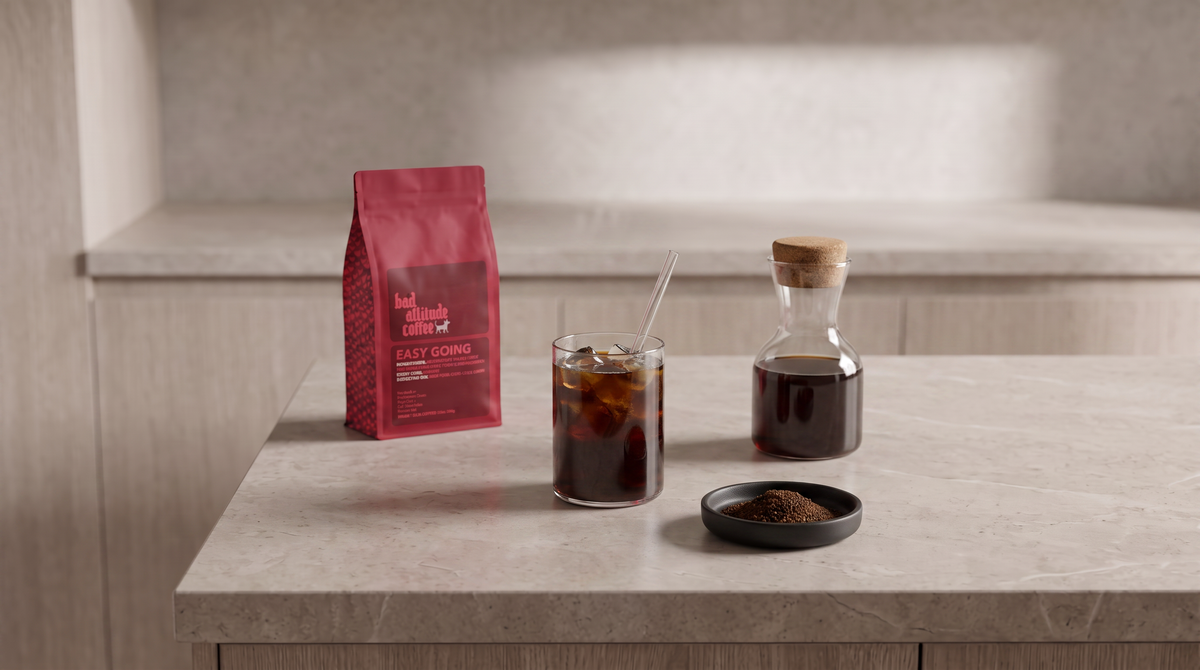
Cold extraction
Keep refrigerated and use within one week.
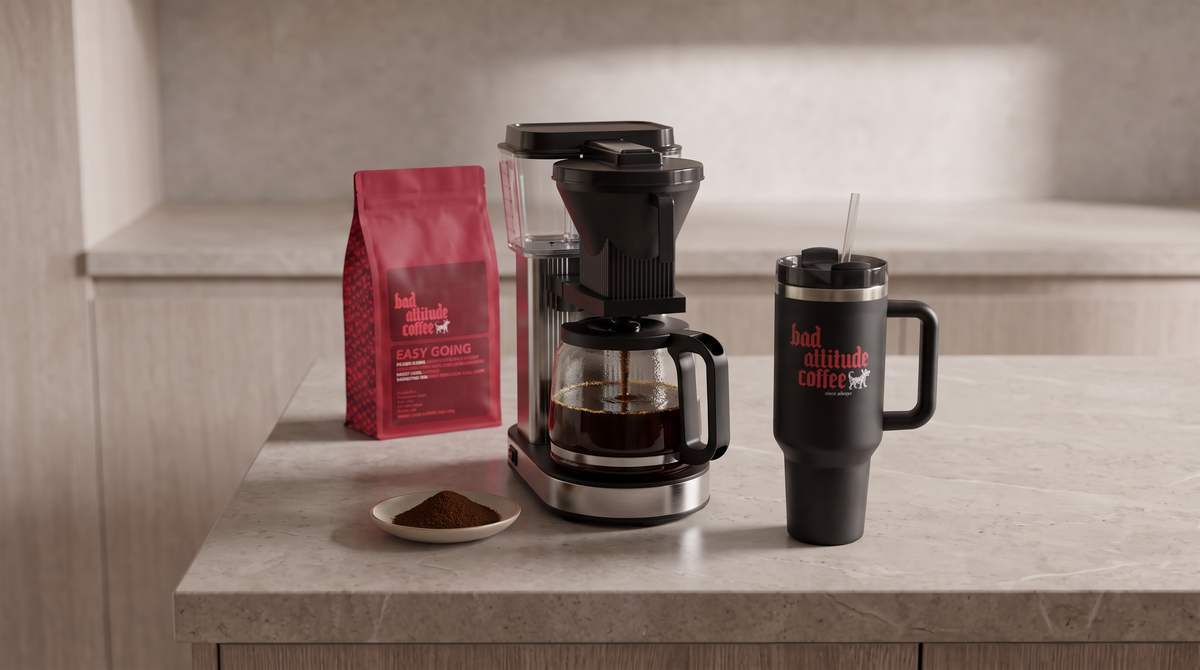
Automatic filter
Use a scale for repeatable batches.
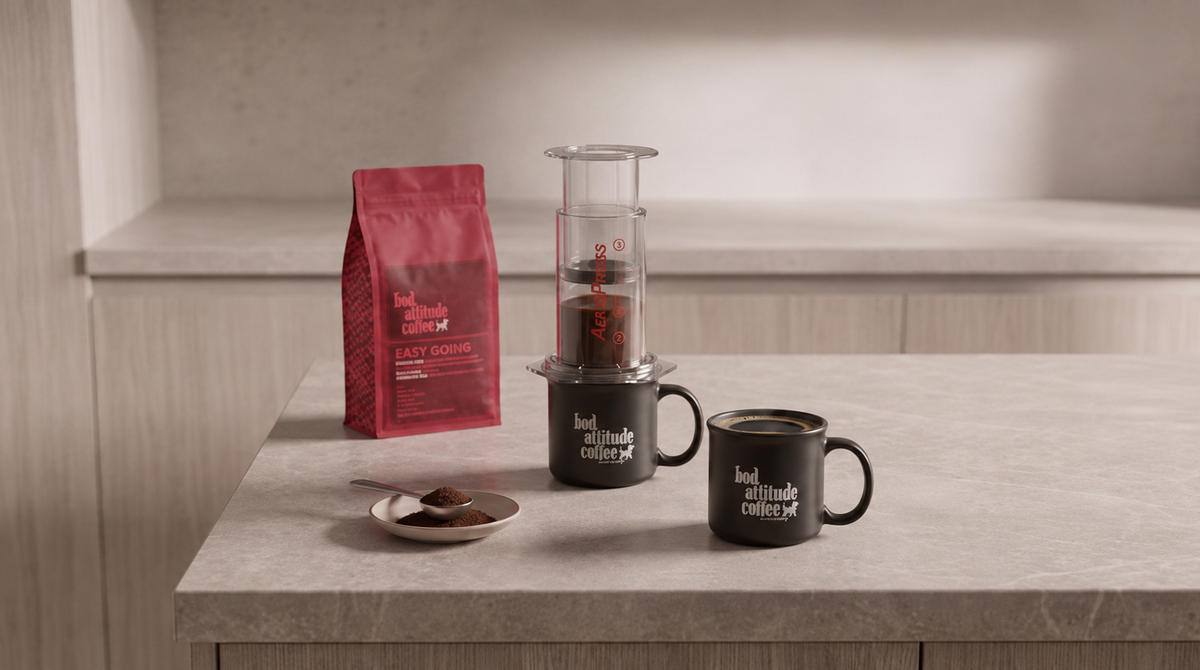
Manual pressure
A gentler press makes a cleaner cup.
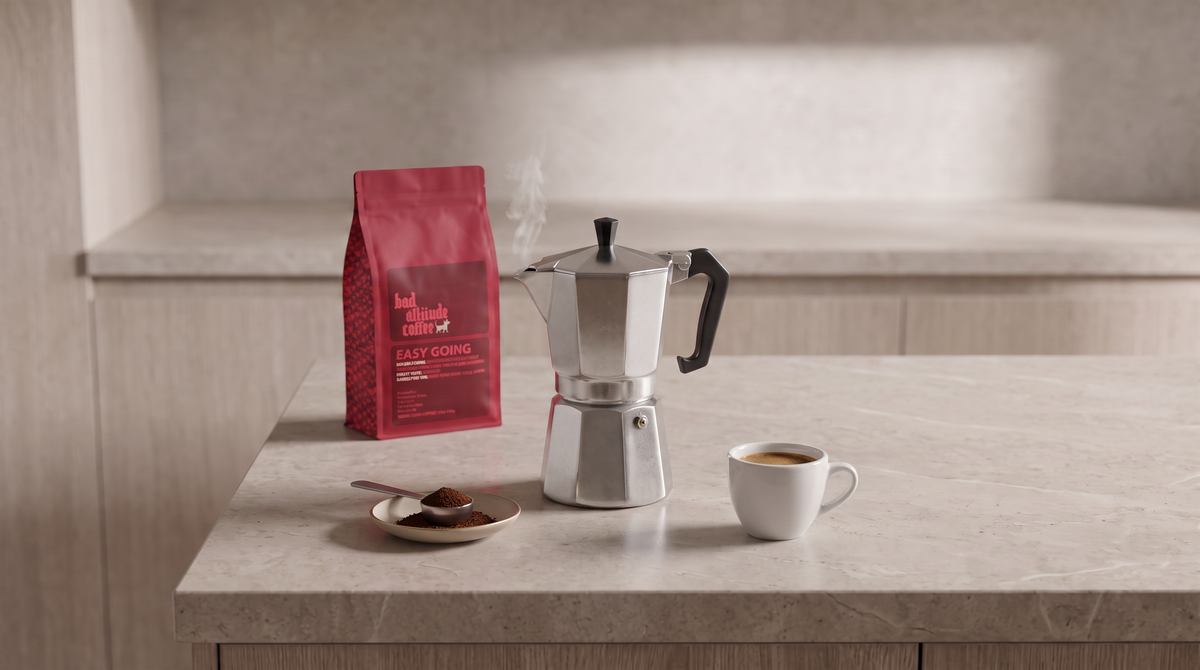
Stovetop pressure
Do not tamp the coffee.
Before the roaster
The Special follows the harvest: rotating single-origin coffees from limited lots, chosen with our roasting partner for quality, character, and the people behind the crop.
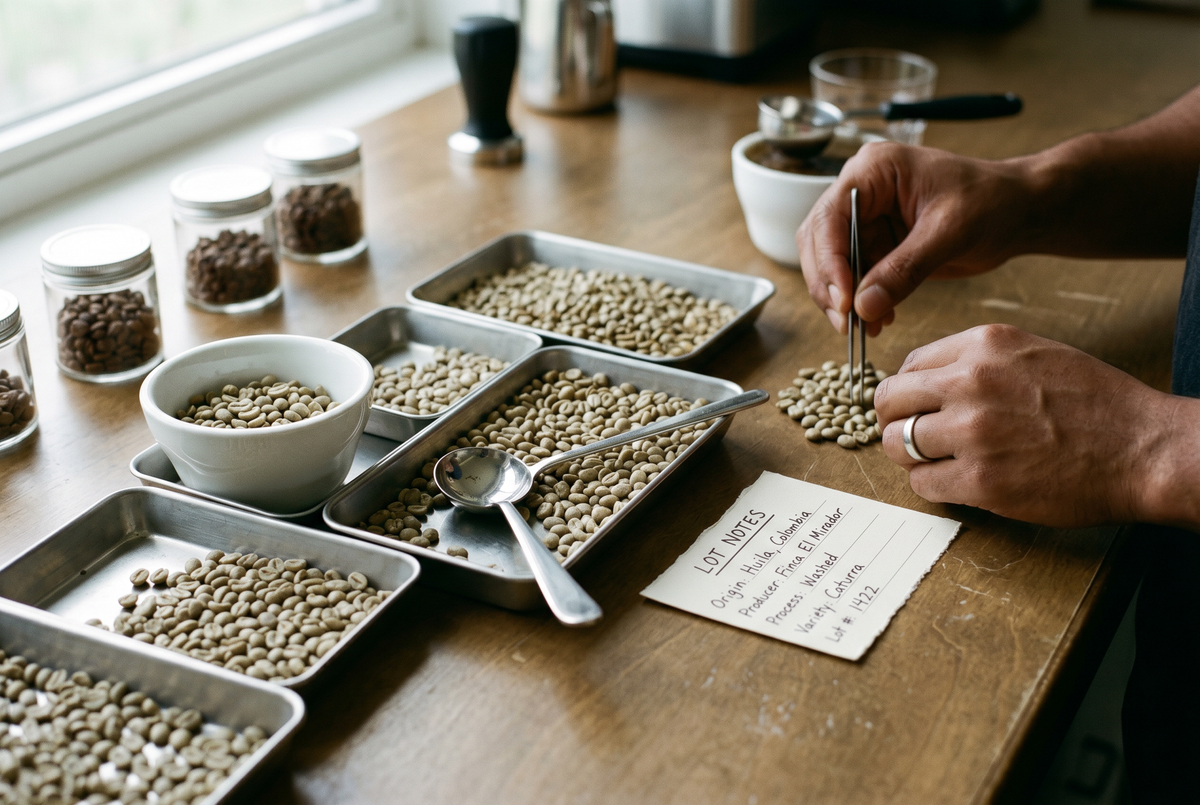
Our sourcing partner works with smallholder farmers, co-ops, and growing communities with a focus on responsible practices, transparency, and quality in the cup.
We look at the farm, the farmer, the practices, and the coffee.
Heat changes everything
Roasting turns a dense green seed into the aromatic bean you know. As heat builds, sugars brown, acids shift, and hundreds of aroma compounds develop.
Moisture leaves the green coffee so flavor reactions can begin.
Sugars and amino acids build caramel, toast, nut, and chocolate notes.
Steam pressure opens the bean. The roaster starts making fine timing decisions.
The final stretch shapes sweetness, body, brightness, and finish.
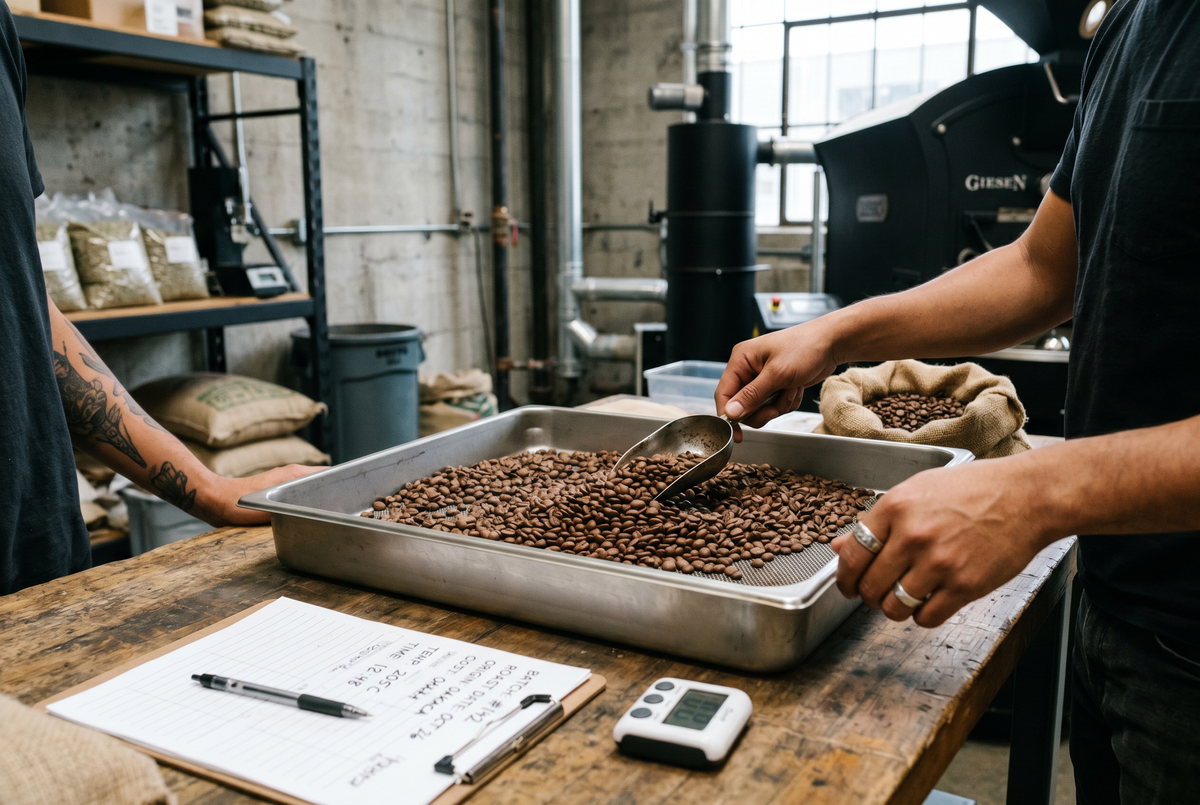
Small-batch roasted weekly. Clean, consistent, and worth coming back for.
No personality test required
Light
More fruit, floral character, acidity, and origin-specific detail. Usually a lighter body.
Medium
Sweetness, brightness, body, and roast character meet in the middle.
Dark
More chocolate, caramel, body, and low-toned richness. The Special currently lives here.
Taste like you mean it
You do not need a flavor wheel or a serious face. Pay attention as the coffee cools; the cup becomes more talkative.
Notice the dry grounds, then the aroma after water hits.
Look for body and first impressions. Sweet? Bright? Deep?
Fruit, chocolate, and subtle sweetness become easier to separate.
Chocolatey or fruity is enough. Your palate learns by repetition.
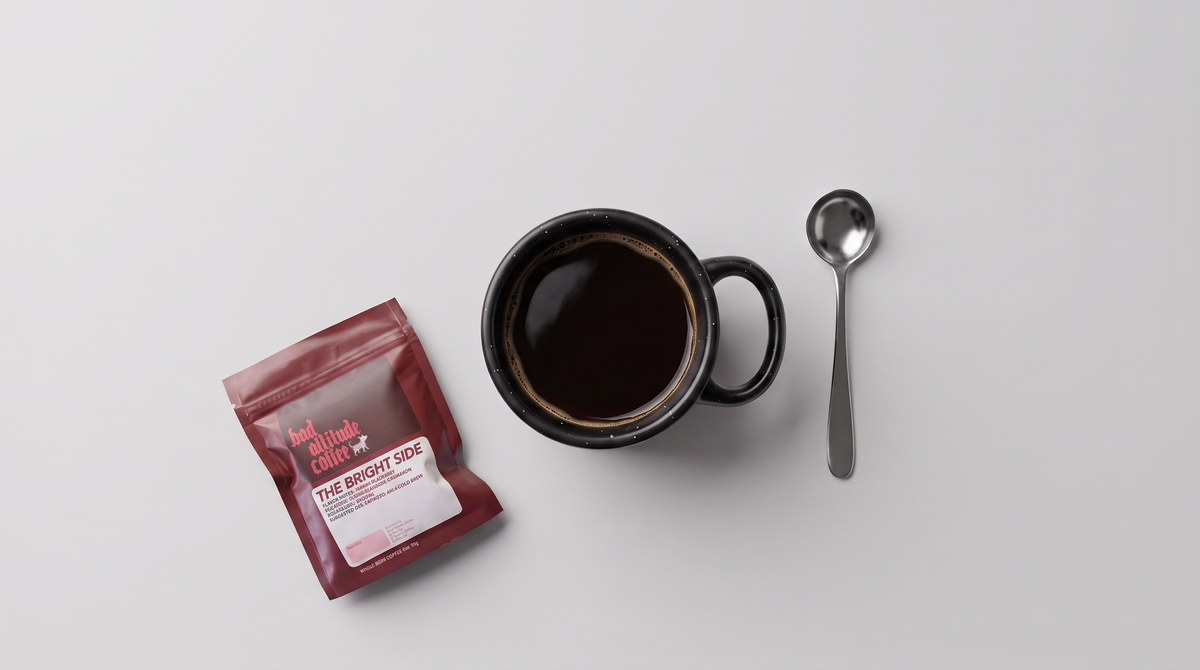
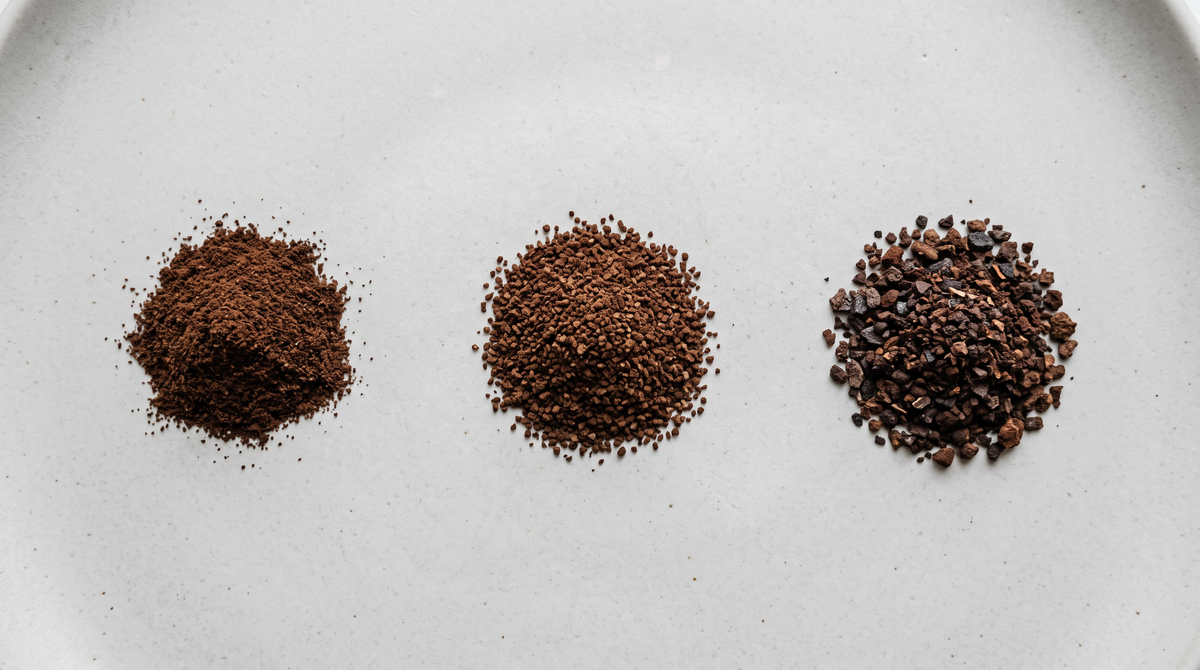
The fastest way to change a cup
Espresso. Short contact time needs more surface area.
Drip and pour-over. Think table salt moving toward sand.
French press and cold brew. Longer contact needs larger particles.
Sour or weak? Grind a little finer.
Bitter, dry, or harsh? Grind a little coarser.
Tiny adjustments. Big consequences. Coffee is dramatic that way.
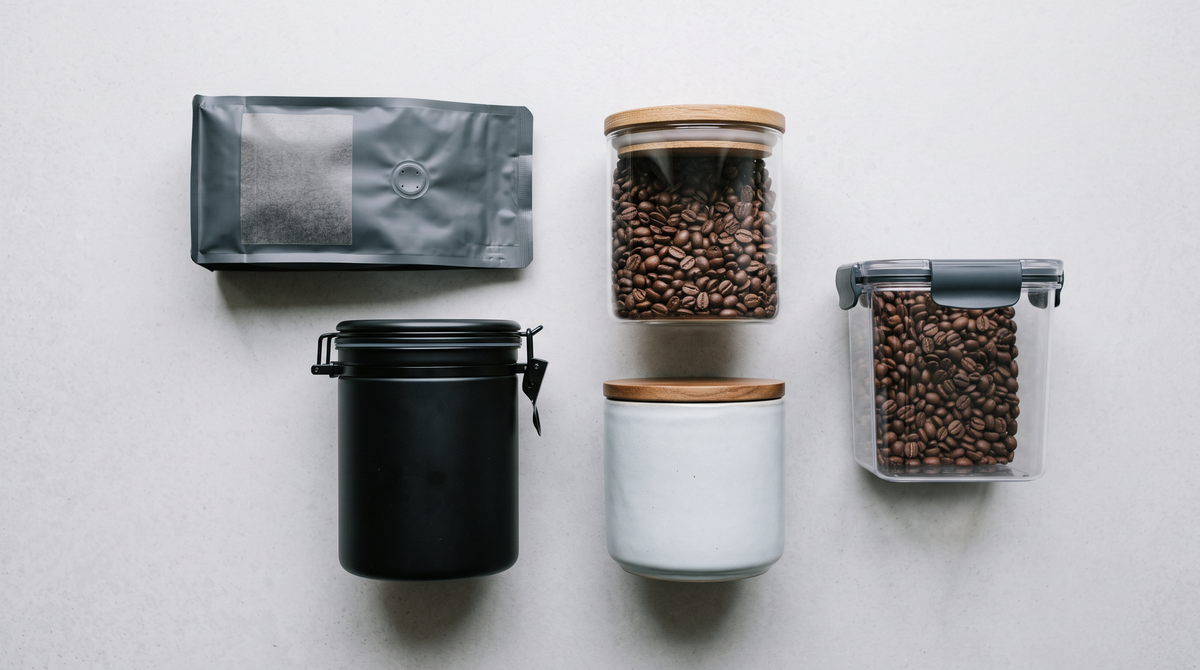
Protect the good stuff
Whole beans stay fresher longer and let you grind for the way you actually brew. One extra step. Better coffee. Reasonable trade.
Your cup is giving you clues
The coffee is probably under-extracted.
The coffee is probably over-extracted.
Strength and extraction are not the same thing.
Check freshness before changing the recipe.
THAT'S THE USEFUL PART
Use the ratios. Notice what changes. Keep what works. Skip the rest.
Coffee should be better, not more complicated.
Brew it. Keep it. Share it.
Save the ratios, print a clean kitchen copy, share it, or download a branded PDF card.

Pour-over
Clean, bright, and built to show what the coffee is doing.

French press
A full-bodied cup with almost no equipment drama.
Cold brew
A smooth concentrate for mornings that start before your opinions do.